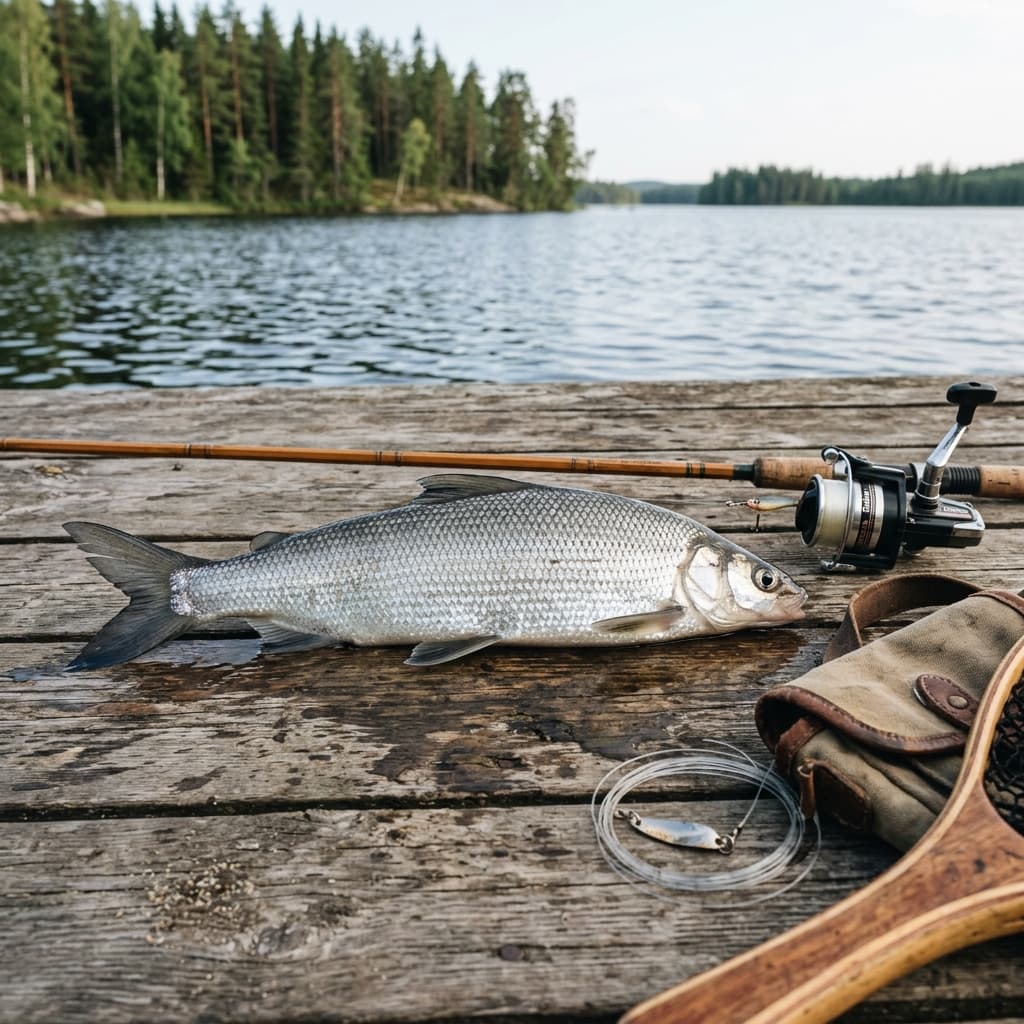
Whitefish
European Whitefish (Coregonus lavaretus)
The European whitefish (simply "siika" in Finnish) is a highly diverse salmonid species with several ecological forms in Finland, including migratory, lake, and sea-spawning whitefish. It is known as a delicate and cautious fish, requiring subtle fishing tackle and techniques.
Characteristics and Habits
Whitefish typically have silvery sides, a white belly, and a dark grey or bluish back. Like all salmonids, they possess an adipose fin. The mouth of the whitefish is small, toothless, and points slightly downward. They feed primarily on benthic invertebrates, zooplankton, and insects. Whitefish thrive in cool, clean, and oxygen-rich waters in both large inland lakes and Baltic coastal areas.
Fishing
Whitefish fishing has surged in popularity, particularly in the spring right after ice-out.
- Spring bait fishing (Siikaonginta): A highly popular activity on the southern and western coasts of Finland in March–May. Anglers use bottom ledgering (running sinker rigs) baited with earthworms.
- Fly fishing: Especially during summer evenings when whitefish rise to feed on hatching insects. Tiny dry flies or midges and small nymphs are used.
- Ice fishing: During winter, whitefish are targeted on clear lakes and coastal bays using small mormyskas (jigs) and vertical spoons. The bite of a whitefish is often extremely subtle.
As a Food Fish
Whitefish is one of Finland's most valued culinary fish. Its white, relatively fatty meat is fine-textured and delicious. It is perfect for curing (graavi), hot-smoking, pan-frying in butter, or baking. Whitefish roe (mäti) is also a highly prized and sought-after delicacy.