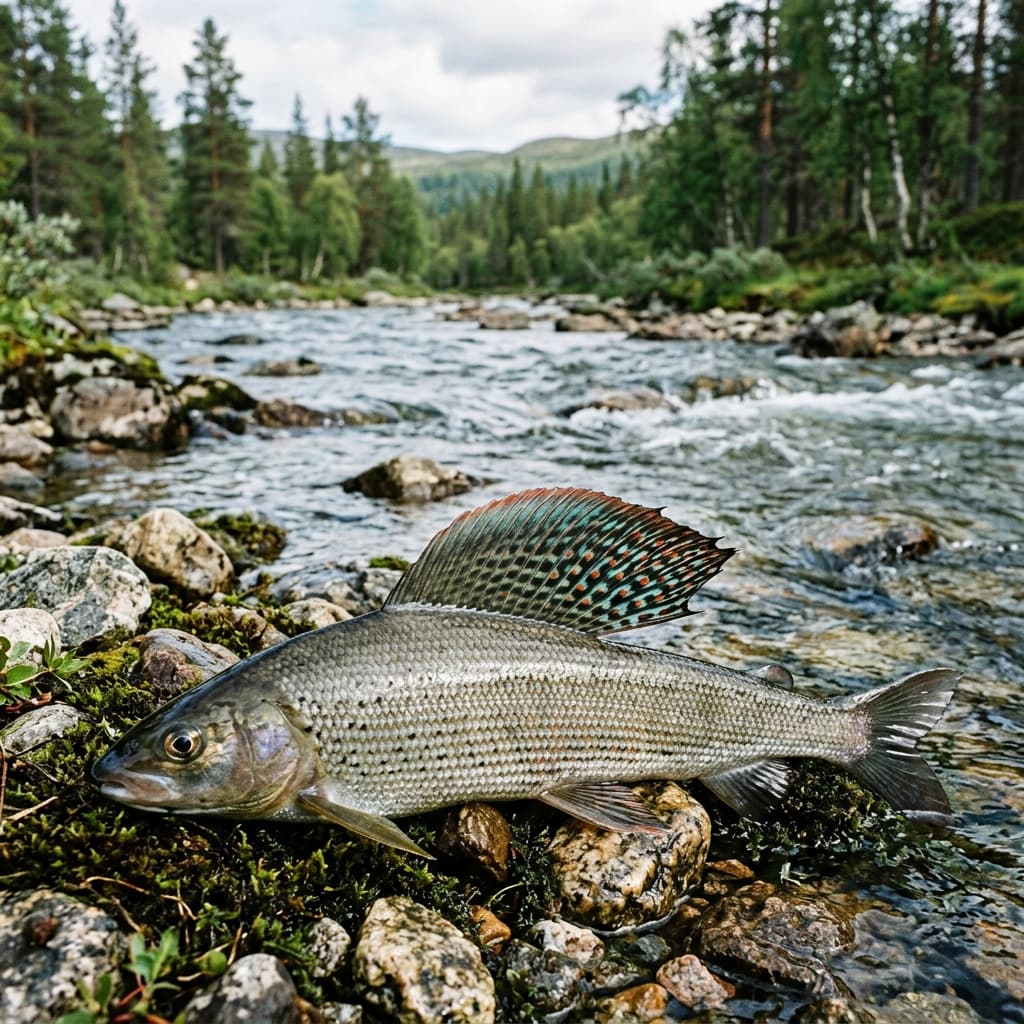
Grayling
Grayling (Thymallus thymallus)
The grayling (often called "harri" in Finnish) is one of Finland's most beautiful salmonid species. Thriving in clean, oxygen-rich, flowing waters, it is a highly popular target fish for anglers visiting Northern Finland and Lapland, though it is also found in some southern streams and along the Baltic coast of the Gulf of Bothnia.
Characteristics and Habits
The most recognizable feature of the grayling is its large, sail-like, and colorful dorsal fin, which often features reddish and violet spots. The grayling's mouth is small and points slightly downward, reflecting its habit of feeding on benthic invertebrates and insects drifting on the surface. Its sides shimmer in silver, grey, and sometimes copper or purple. Unlike salmon, the grayling does not migrate long distances and tends to stay in the same river sections year-round.
Fishing
Grayling are considered excellent target fish for fly fishing as they eagerly rise to feed on insects on the water surface.
- Fly fishing: Dry flies and wet flies (like nymphs and pupae) are very effective. Grayling will often rise to dry flies even when there is no visible insect hatch.
- Light spin fishing: Small spinners (such as Mepps or Bete Lotto) and tiny crankbaits are effective when casting for grayling.
- Ice fishing: In late winter and early spring, ice fishing for grayling on mountain lakes in Lapland under the spring sun is highly popular. Small vertical jigs and mormyskas work best.
As a Food Fish
The meat of the grayling is white, firm, and has a delicate, mild flavor. It is at its best when prepared immediately after being caught, as the meat softens quickly during storage. Traditional preparation methods include grilling over an open campfire on a wooden stick, hot-smoking, or pan-frying with butter.