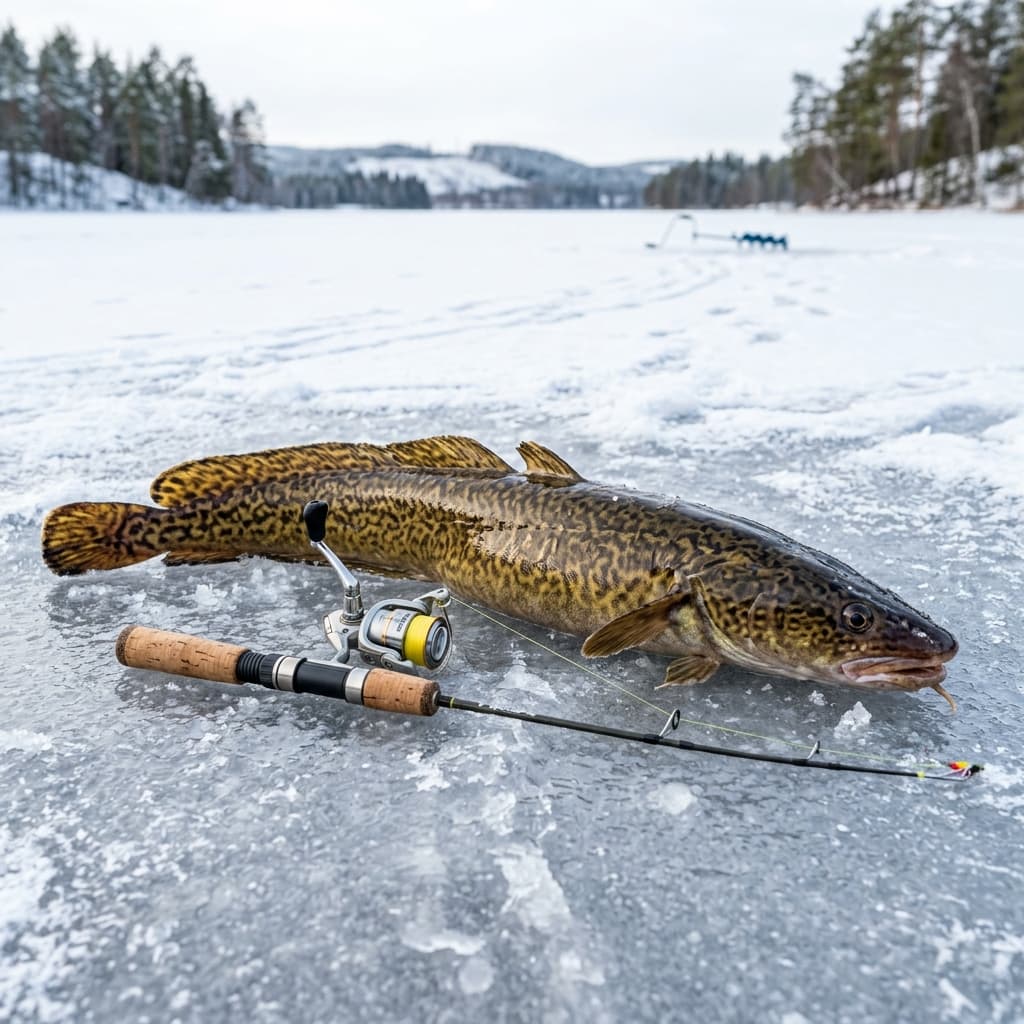
Burbot
Burbot (Lota lota)
The burbot (known as "made" or "matikka" in Finnish) is a unique fish in Finland's waters. It is the only freshwater representative of the cod family (Gadidae) in our country, also thriving in brackish coastal waters. The burbot is a cold-water fish, which is most active during winter. Its spawning season in January–February offers a highly unique fishing season.
Characteristics and Habits
The burbot is easily identified by its elongated body, flattened head, and a single chin barbel. Its skin is covered in very tiny scales, slimy and soft to the touch, with a marbled yellowish-brown or olive-green coloration. Burbot inhabit deep areas near the bottom. They are nocturnal predators, feeding on small fish, fish eggs, and benthic invertebrates.
Fishing
Burbot fishing is heavily focused on winter, especially during the spawning season in January and February.
- Burbot ice fishing (Madepilkintä): The most popular and traditional method, done after dark. Anglers use specialized heavy spoons (burbot jigs) or hooks tipped with a piece of baitfish (like roach) and tap it repeatedly on the sandy or muddy bottom to attract the fish.
- Setlines and traps: Burbot are also caught under the ice using passive fishing gear such as baited hooks or traps.
As a Food Fish
Burbot is an excellent and highly regarded food fish. Its white meat is firm, virtually boneless, and tastes similar to cod. Traditional burbot soup ("madekeitto"), cooked with cream, butter, and potatoes, is a classic Finnish winter delicacy. Burbot liver (maksa) is considered a gourmet treat, as is its roe, which is highly sought after during winter. The tough skin is traditionally skinned off before cooking and was historically even tanned for leather crafts.